Introduction
Artificial intelligence is accelerating the evolution of digital creativity at an unprecedented pace. By 2026, Midjourney will continue to stand out as one of the top AI platforms for generating images. Whether creating cinematic visuals, fantasy illustrations, YouTube thumbnails, ad content, or lifelike portraits, it enables artists and designers to produce high-quality, professional imagery. Nowadays, designers, marketers, agencies, YouTubers, and businesses alike leverage AI-generated visuals to cut down on time and expenses, boost creative output, and accelerate content production beyond what traditional design methods allow.
Rather than focusing solely on basic Discord commands like many outdated resources, this comprehensive Midjourney guide dives into current AI workflows, advanced prompt techniques, commercial licensing, ways to monetize, branding frameworks, cinematic storytelling methods, and emerging trends in AI-driven content creation.
Midjourney runs on prompts that turn words into images, shaping visuals through user input. Its cost changes based on usage levels, fitting different needs without fixed tiers. Artists often blend it into daily routines alongside design software for faster output. Selling generated artwork happens across platforms where buyers want unique pieces. Other tools mimic its function but shift features to stand apart slightly. Using these systems well means understanding limits as much as possibilities by 2026.
What Is Midjourney AI Art Generator?
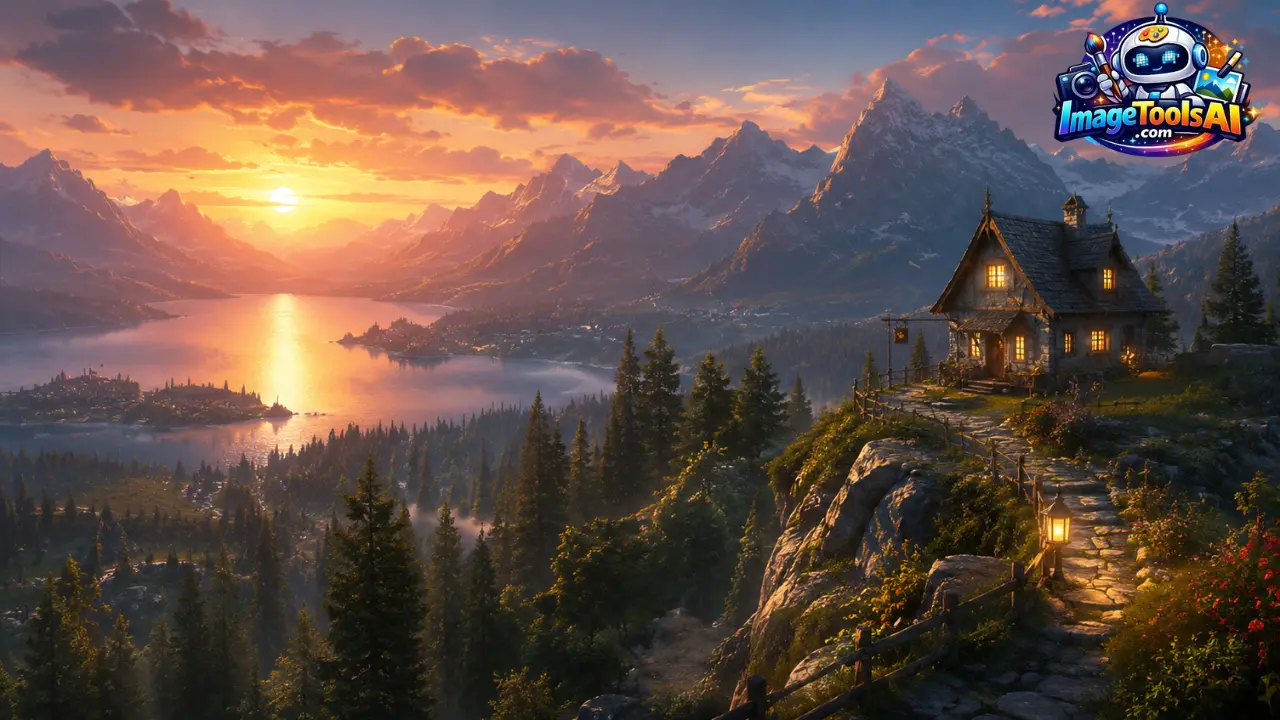
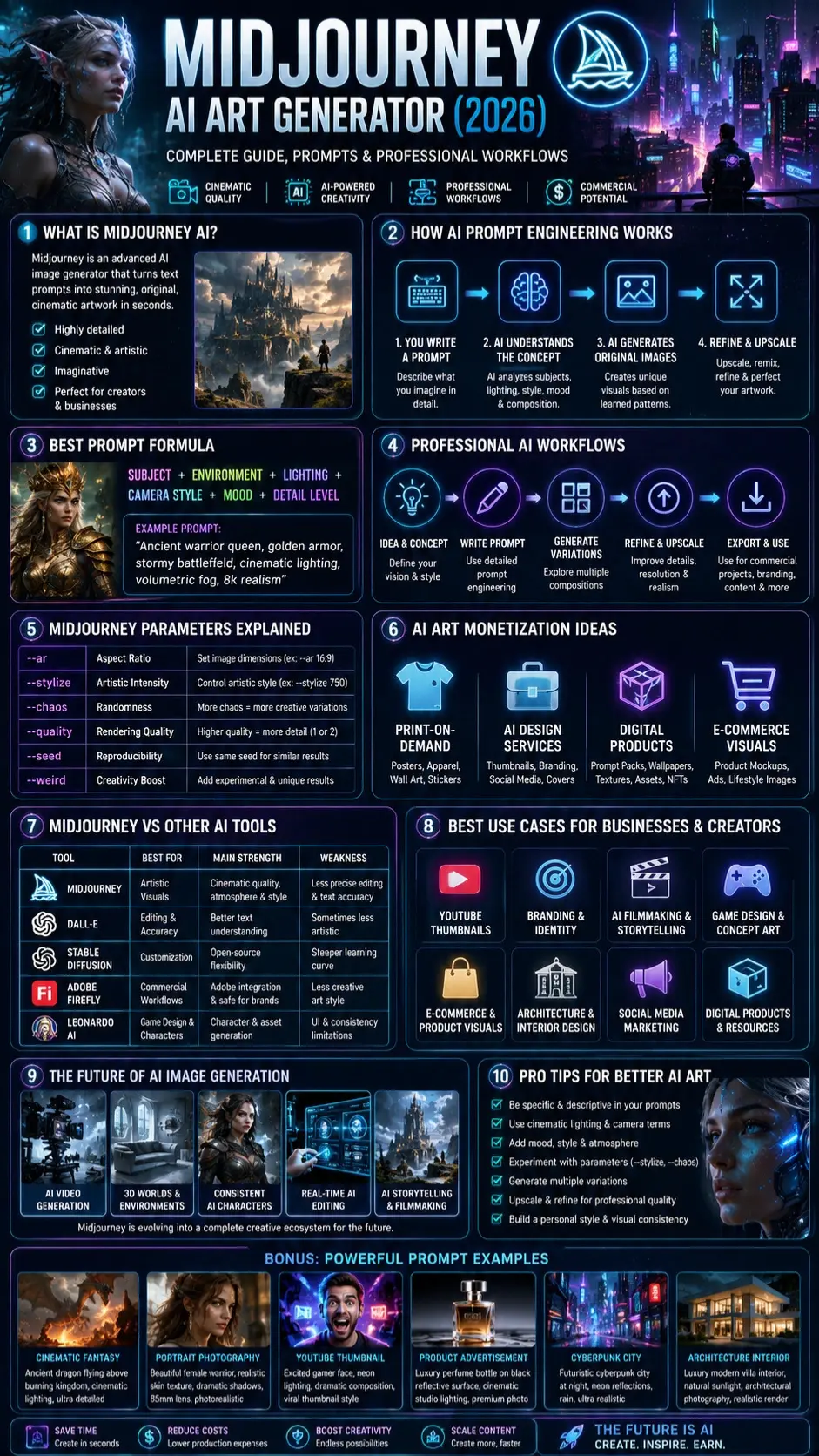
Pictures come alive from words, thanks to Midjourney – a smart tool crafting sharp images through text descriptions. It thinks like an artist, interpreting each line you write into visual form. Not magic, just clever code shaping ideas pixel by pixel. Every prompt gets turned into a unique scene, full of detail and depth. The system learns patterns, then paints them realistically without copying anything exactly.
With just a few words typed in plain language, pictures appear – crafted fresh by artificial intelligence in moments.
Example Prompt
“A futuristic cyberpunk city at night, neon reflections, cinematic lighting, rainy atmosphere, ultra detailed, photorealistic”
Midjourney then creates multiple artistic interpretations based on the prompt.
Unlike traditional graphic design software, Midjourney focuses heavily on:
- Cinematic aesthetics
- Visual storytelling
- Emotional atmosphere
- Imaginative compositions
- Stylized rendering
- Artistic depth
- Dramatic visual language
This distinctive artistic quality is one of the biggest reasons Midjourney remains among the most popular AI art generators in 2026.
How Midjourney AI Works
A giant collection of pictures and words helps Midjourney’s smart software learn how things look and connect. Through layers of pattern recognition, it gradually builds visuals from descriptions given by users. Instead of copying, the system imagines new scenes based on what it has studied before. Learning happens step by step, reversing noise into clear forms over time.
Most times, picture creation moves through four key phases. Starting, ideas take shape before anything appears visually. Then comes a phase where rough forms begin to emerge slowly. After that, details get added piece by piece. Finally, the last step locks everything into place.
User Creates a Prompt
A picture forms when someone describes what they want to see. Words shape the scene step by step instead of paint or pencils. A clear thought turns into visual details through careful phrasing. Description guides each element placement without drawing tools. Thoughts become visible using only sentences built with intent.
Example
“Ancient warrior queen standing in golden armor, stormy battlefield, cinematic lighting, volumetric fog, ultra realistic”
The more specific and layered the prompt becomes, the stronger the final image quality usually appears.
AI Understands Visual Concepts
Midjourney analyzes multiple visual components, including:
- Subjects
- Environment
- Lighting
- Composition
- Textures
- Mood
- Camera angles
- Color grading
- Artistic styles
The AI attempts to interpret the user’s creative intention and visual storytelling direction.
AI Generates Original Images
The system synthesizes completely new visuals using learned visual patterns and artistic relationships.
Unlike some AI platforms that prioritize strict accuracy, Midjourney strongly emphasizes:
- Emotional impact
- Atmospheric storytelling
- Dramatic compositions
- Artistic expression
- Cinematic aesthetics
This is why Midjourney frequently produces more visually striking outputs than many competitors.
Refinement & Upscaling
Users can further improve outputs by:
- Upscaling images
- Creating variations
- Remixing generations
- Refining details
- Improving realism
- Maintaining style consistency
Professional creators often generate dozens of variations before selecting a final composition.
Key Features of Midjourney AI Art Generator
AI Image Generation
Generate highly detailed artwork from simple text prompts within seconds.
Style References
Maintain visual consistency across projects and campaigns.
Useful for:
- Branding
- Character design
- Commercial campaigns
- Marketing systems
Character Consistency
Create recurring AI characters for:
- Comics
- Storytelling
- YouTube branding
- Gaming projects
- Digital mascots
Upscaling
Enhance image quality for:
- Commercial printing
- Advertising
- Professional publishing
- Product campaigns
Remix Mode
Modify existing outputs creatively while preserving the original visual structure.
Aspect Ratio Controls
Generate multiple image formats, including:
- Square
- Portrait
- Landscape
- Cinematic widescreen
- Social media dimensions
Stylization Parameters
Control:
- Realism
- Creativity
- Experimental aesthetics
- Artistic intensity
- Chaos levels
These controls allow creators to fine-tune visual results with precision.
Midjourney Pricing
Pricing structures evolve, but the platform generally offers multiple subscription tiers.
| Plan | Best For | Features |
| Basic Plan | Beginners | Limited generations |
| Standard Plan | Regular creators | More fast generations |
| Pro Plan | Professionals | Advanced workflows |
| Mega Plan | Agencies & studios | High-volume production |
How to Use Midjourney AI Art Generator
Create an Account
Users can access Midjourney through:
- Discord
- Official web interface
Write Detailed Prompts
Detailed prompts significantly improve output quality.
Example
“Ultra realistic astronaut standing in neon Tokyo rain, cinematic lighting, reflections, volumetric fog, 8k realism.”
Generate Variations
Midjourney produces multiple image options.
Choose the strongest composition and continue refining it.
Upscale & Refine
Improve:
- Resolution
- Realism
- Details
- Lighting
- Composition
Export & Use
Use AI-generated visuals for:
- Websites
- Advertising
- Branding
- YouTube thumbnails
- Product mockups
- Print-on-demand stores
- Social campaigns
Best Midjourney Prompt Structure
Prompt engineering is one of the most important skills in AI image creation.
Professional Prompt Formula
Subject + Environment + Lighting + Camera Style + Mood + Detail Level
Example
“Ancient warrior queen, golden armor, stormy battlefield, cinematic lighting, ultra detailed, volumetric fog, 8k realism”
This structure dramatically improves visual quality.
Best Midjourney Parameters Explained
| Parameter | Function |
| ar | Aspect ratio |
| stylize | Artistic intensity |
| chaos | Randomness |
| quality | Rendering quality |
| seed | Reproducibility |
| weird | Experimental creativity |
These parameters provide greater creative control over AI outputs.
Benefits of Midjourney for Creators & Businesses
Marketers
Create:
- Advertising visuals
- Social campaigns
- Landing page graphics
- Brand storytelling imagery
YouTubers
Generate:
- Viral thumbnails
- Character concepts
- Channel branding
- Cinematic backgrounds
ECommerce Brands
Use AI visuals for:
- Product visualization
- Lifestyle mockups
- Fashion concepts
- Promotional campaigns
Game Developers
Generate:
- Character designs
- Environment concepts
- Worldbuilding assets
- Creature ideas
Architects & Interior Designers
Rapidly create:
- Moodboards
- Interior concepts
- Presentation visuals
- Prototype environments
Midjourney vs Other AI Art Generators
| Tool | Best For | Main Strength |
| Midjourney | Artistic visuals | Cinematic quality |
| DALL·E | Editing & accuracy | Natural language understanding |
| Stable Diffusion | Customization | Open-source flexibility |
| Adobe Firefly | Commercial workflows | Adobe integration |
| Leonardo AI | Game design | Character generation |
Pros and Cons of Midjourney
Pros
- Exceptional image quality
- Cinematic artistic direction
- Fast Generation Speeds
- Outstanding fantasy visuals
- Professional-grade outputs
- Powerful creative inspiration
Cons
- Paid subscription required
- Prompt learning curve
- Ongoing copyright debates
- Occasional anatomy inconsistencies
- Limited advanced editing controls
Commercial Rights & Copyright Concerns
AI-generated artwork continues to create significant legal discussions worldwide.
Important concerns include:
- Copyright ownership
- Commercial licensing
- Artist compensation
- Training-data transparency
- Intellectual property protection
Businesses using AI-generated visuals commercially should always review Midjourney’s latest licensing policies carefully.
This is especially important for:
- Agencies
- Publishers
- Advertising companies
- Marketing teams
- eCommerce businesses
European organizations should also monitor evolving EU AI regulations.
AI Art Monetization Opportunities
Sell Print-on-Demand Products
Popular marketplaces include:
- Etsy
- Redbubble
- Society6
Sell products such as:
- Posters
- Apparel
- Wallpapers
- Stickers
- Canvas art
Offer AI Design Services
Freelancers increasingly sell:
- YouTube thumbnails
- AI book covers
- Branding visuals
- Social media graphics
- Concept artwork
Create Digital Products
Popular digital assets include:
- Prompt packs
- Printable artwork
- Wallpaper collections
- Texture libraries
- NFT collections
How to Write Better AI Art Prompts
Strong Prompt Example
“Cinematic Viking warrior standing on snowy mountain, storm clouds, dramatic lighting, photorealistic, ultra detailed, 8k”
Weak Prompt Example
“Viking warrior”
The more context and visual direction you provide, the better Midjourney performs.
Midjourney for European Businesses
Businesses across Europe increasingly use AI-generated visuals for:
- Tourism campaigns
- Digital advertising
- Product marketing
- Startup branding
- Real estate visualization
- Fashion concepts
Countries including:
- Germany
- France
- Spain
- Italy
- United Kingdom
They are rapidly adopting AI-powered creative systems.
The Future of Midjourney AI
The future of AI image generation may include:
- AI video generation
- Real-time editing
- 3D world creation
- Consistent AI characters
- Interactive storytelling
- AI filmmaking workflows
- Real-time animation systems
Midjourney is evolving beyond basic image generation into a complete creative ecosystem.
FAQs
A: Midjourney mainly operates on paid subscription plans. Free trials occasionally appear, but most users require a premium plan for regular usage.
A: It depends on your goals. Midjourney excels in cinematic artistic visuals, while DALL·E performs better for editing accuracy and object precision.
A: Yes, many creators commercially monetize AI-generated artwork. However, users should review the latest licensing terms carefully before selling.
A: Yes. Beginners can create impressive visuals quickly, although advanced prompt engineering requires practice and experimentation.
The best prompts combine:
Detailed subjects
Cinematic lighting
Camera styles
Mood descriptions
Realism modifiers
Conclusion
By 2026, Midjourney isn’t merely some test project anymore – instead, it shapes how visuals come alive across brands, art, and Online Expression. While others dabble, this system builds full worlds with quiet precision. Design now moves faster because of its reach. Images form in ways once thought impossible. Because of that shift, creators see new paths opening. Tools evolve when people push them far enough.
Midjourney helps artists and companies make top-quality images quickly, whether for films, thumbnails, ads, products, or early design sketches. What sets it apart is mood-rich results paired with detailed control through prompts – few tools match its creative range right now.
As artificial intelligence continues evolving toward AI filmmaking, real-time editing, 3D environments, and interactive storytelling, Midjourney is expected to play a major role in the next generation of creative workflows.