Introduction:
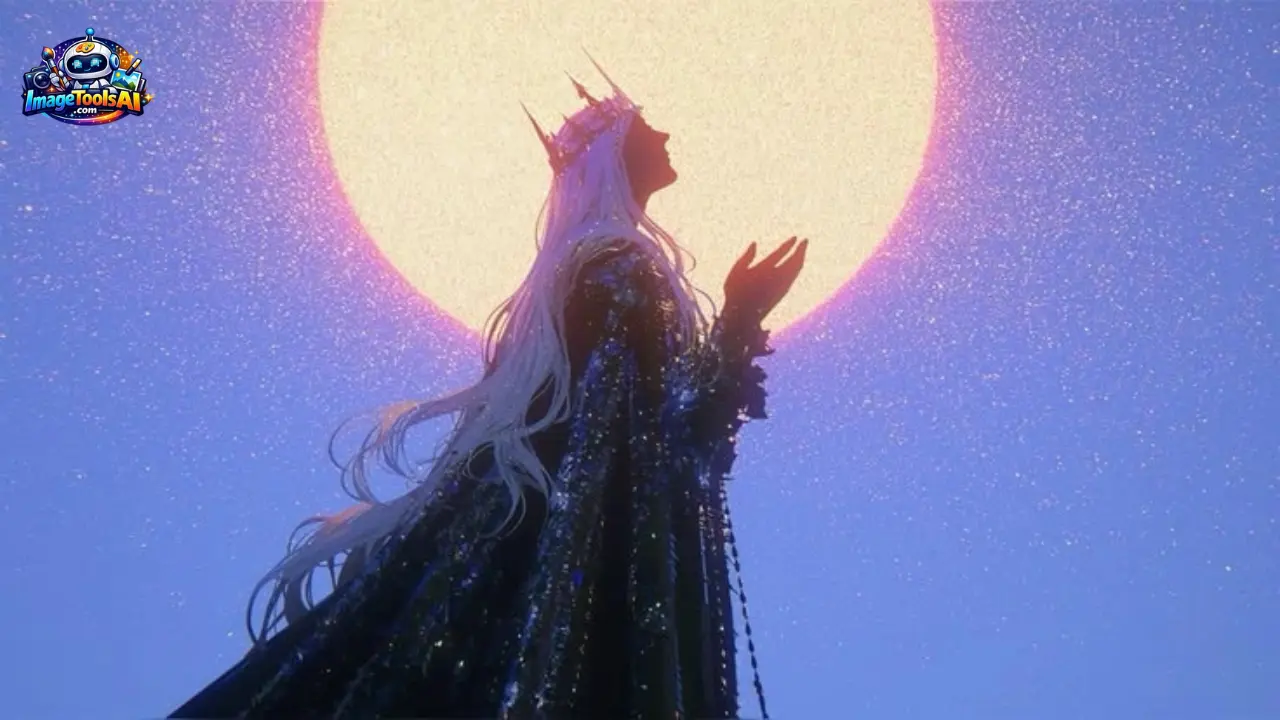
Out of nowhere, machines began drawing like artists. By 2026, AI image tools will no longer be experiments—they’ll be producing finished visuals used by creators and studios worldwide. One of the biggest shifts came with Niji 7, a model built specifically for anime and digital art. Instead of serving every style, it focuses on expressive characters, cinematic scenes, and polished illustrations.
Imagine typing a scene and watching it turn into vibrant anime art within seconds. No years of sketching practice. No complex software. Just words becoming visuals. That speed has made Niji 7 popular with freelancers, marketers, YouTubers, game developers, and comic creators.
What makes it different is specialization. While many AI generators try to handle everything, Niji 7 Concentrates on anime aesthetics—clean linework, dramatic expressions, dynamic poses, and story-driven composition. Because of that narrow focus, results often feel more intentional and polished.
This guide explores Niji 7 in 2026: how it works, its key features, pricing, strengths, limitations, and why creators across industries are using it today.
- Facial emotion detail and expression dynamics
- Manga-inspired line art structure
- Cinematic lighting and composition
- Stylized character proportions
- Scene storytelling and visual narrative flow
What is Niji 7?
Picture something that turns words into anime scenes – this one’s called Niji 7. Built on smart tech, it shapes descriptions into detailed artwork with a distinct animated look. Part of a newer wave of image-making systems, it leans hard on diffusion methods. Its focus? Stylized visuals that tell stories in classic anime fashion.
A single idea drives it – turning written words into drawn scenes, much like an animator who reads your thoughts. Instead of sketching by hand, this tool paints images from phrases you provide. What emerges feels personal, shaped only by what you describe. Each detail grows from the way you explain things. Not magic, just lines built from language.
Core Purpose of Niji 7
The primary goal of Niji 7 is to:
- Generate anime-style visuals from text input
- Assist in rapid character and scene design
- Support manga-style storytelling creation
- Enable visual content production without manual drawing
Key Differentiator
Unlike general AI art systems, Niji 7 is not designed for realism or photography-style outputs. Instead, it focuses exclusively on:
- Anime illustration accuracy
- Stylized character emotions
- Clean manga-inspired outlines
- Artistic composition consistency
This makes it especially valuable for creators in the animation, storytelling, and gaming industries.
Key Features of Niji 7
Niji 7 introduces multiple enhancements that significantly improve usability, accuracy, and visual output quality.
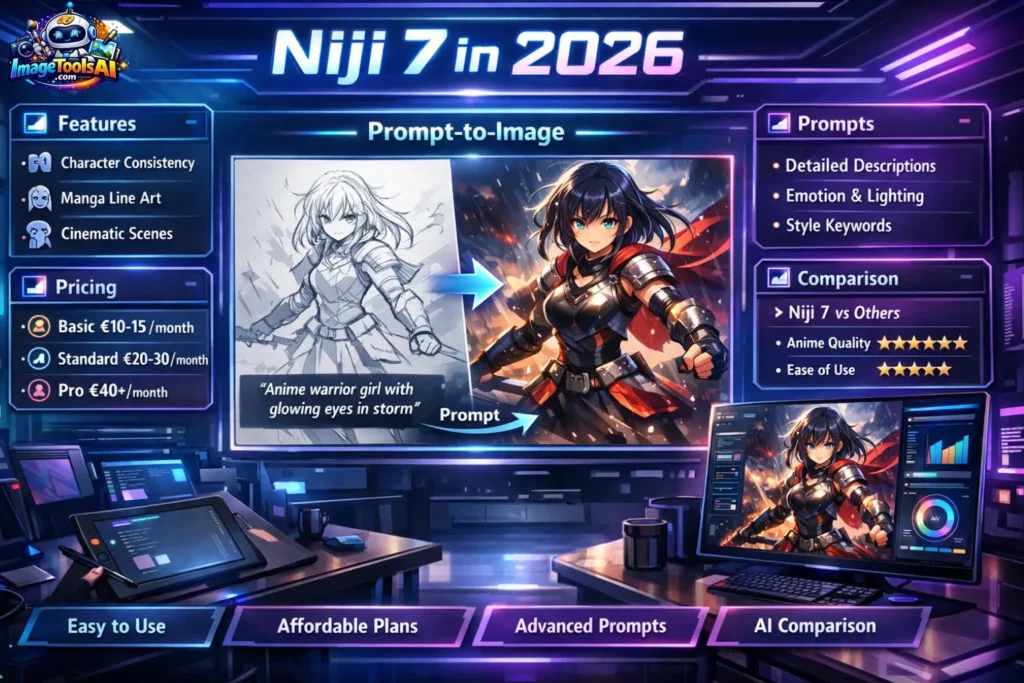
Strong Character Consistency
One of the most important improvements is identity stability across images. Characters now remain visually consistent across multiple generations.
These benefits:
- Manga artists
- Game designers
- Story-driven creators
Key improvements:
- Stable facial structure
- Consistent proportions
- Repeatable character identity
Advanced Prompt Understanding
Niji 7 demonstrates significantly improved semantic comprehension. It can now interpret:
- Multi-character scenes
- Complex storytelling prompts
- Layered environmental descriptions
Example:
“A lonely anime girl walking through rainy Tokyo streets illuminated by neon lights”
The model accurately reflects:
- Rain atmosphere
- Emotional sadness
- Neon city glow
- Night-time cinematic mood
High-Quality Manga Line Art
The output now includes:
- Cleaner outlines
- Reduced visual noise
- More professional ink-style rendering
This makes it ideal for:
- Comic publishing
- Digital manga creation
- Print-ready illustrations
Cinematic Environment Generation
Backgrounds are significantly enhanced with:
- Depth-based layering
- Atmospheric lighting effects
- Realistic perspective balance
- Environmental storytelling
This helps creators build immersive visual narratives.
Flexible Style Control System
Users can adjust multiple parameters, such as:
- Mood (dark, emotional, cheerful, dramatic)
- Art style (soft anime, sharp manga, cinematic anime)
- Lighting conditions (neon glow, natural sunlight, studio lighting)
This gives creators full artistic control.
Benefits of Niji 7 in 2026
The adoption of Niji 7 continues to grow due to its efficiency and creative empowerment.
Main Advantages
- Rapid content production
- No drawing experience required
- High-quality anime visual output
- Cost-efficient for freelancers
- Scalable for businesses and studios
It reduces production time from hours or days to just seconds.
Real-World Use Cases in Europe and the Global Market
Niji 7 is widely used across multiple creative sectors.
Game Development
Used for concept art, character prototypes, and world-building visuals.
Social Media Content Creation
Influencers and brands use anime visuals for engagement on platforms like TikTok and Instagram.
YouTube Content Production
Used for thumbnails, storytelling backgrounds, and animation scenes.
Freelancing Industry
Freelancers provide AI-generated anime illustrations on platforms such as Fiverr and Upwork.
Manga and Comic Creation
Independent creators use it to build entire story arcs visually.
Step-by-Step Guide: How to Use Niji 7 Effectively
Step 1: Select Model
Choose Niji 7 from your AI art platform interface.
Step 2: Write Structured Prompt
Example:
“anime warrior girl with glowing eyes standing in a storm battlefield”
Step 3: Add Style Enhancers
Include modifiers such as:
- cinematic lighting
- ultra detailed
- soft shading
- anime illustration
Step 4: Generate Image
Click generate and wait a few seconds for output.
Step 5: Optimize Prompt
Refine if necessary:
- Adjust lighting
- Improve emotional tone
- Modify background details
Best Prompt Formula for Niji 7
To achieve high-quality outputs, follow this structured prompt model:
Character + Emotion + Environment + Lighting + Style
Example:
“young mage boy, emotional expression, ancient floating library, warm cinematic lighting, anime illustration style”
This structure improves AI interpretation accuracy significantly.
Pricing of Niji 7
Niji 7 is typically available through subscription-based platforms.
| Plan Type | Price Range | Features |
| Basic | €10–€15/month | Limited generations |
| Standard | €20–€30/month | High-quality outputs |
| Pro | €40+/month | Fast generation + advanced tools |
Pricing may vary depending on the provider platform.
Pros and Cons of Niji 7
Advantages
- High-quality anime generation
- Excellent character consistency
- Fast rendering speed
- Beginner-friendly interface
- Suitable for commercial use
Limitations
- Limited realism output
- Requires strong prompt skills
- Subscription-based access
- Reduced randomness compared to open models
Best Alternatives to Niji 7
Midjourney
Best for artistic realism and hybrid styles.
Stable Diffusion
Best for open-source customization and control.
Leonardo AI
Ideal for game assets and character design workflows.
DALL·E
Best for simple prompt-based image generation.
NovelAI
Specialized in narrative-driven anime artwork.
Niji 7 vs Competitors
| Feature | Niji 7 | Midjourney | Stable Diffusion |
| Anime Quality | ★★★★★ | ★★★★☆ | ★★★★☆ |
| Realism | ★★★☆☆ | ★★★★★ | ★★★★☆ |
| Ease of Use | ★★★★★ | ★★★★☆ | ★★★☆☆ |
| Customization | ★★★★☆ | ★★★★☆ | ★★★★★ |
| Consistency | ★★★★★ | ★★★★☆ | ★★★★☆ |
Expert Tips for Better Results in Niji 7
Be Highly Specific
Avoid vague prompts like:
“cool anime girl”
Use instead:
“silver-haired anime girl with glowing blue eyes and sad expression”
Add Lighting Keywords
- cinematic lighting
- neon glow
- soft shadows
Define Environment Clearly
- cyberpunk city
- fantasy forest
- rainy Tokyo street
Include Emotion Descriptors
- happy
- emotional
- angry
- peaceful
Maintain Structured Prompt Flow
Always follow:
Character → Emotion → Environment → Lighting → Style
How AI Tools Like Niji 7 Are Transforming Creativity
The rise of AI anime generators represents a fundamental shift in digital creativity. In 2026:
- Small creators produce studio-level artwork
- Freelancers Compete globally
- Production cycles are dramatically faster
- Creative industries become more accessible
Europe’s digital content economy especially benefits from rapid visual production demands.
FAQ
A: Niji 7 is used for generating anime-style AI artwork for design, storytelling, and digital content creation.
A: Yes, Niji 7 in 2026 improves consistency, prompt understanding, and overall image quality significantly.
A: Yes, beginners can easily use it, although learning prompt writing improves results greatly.
A: Yes, many freelancers use it for thumbnails, illustrations, and client-based design work.
A: Commercial usage depends on the licensing terms of the platform offering access.
Conclusion
By 2026, Niji 7 will have become a leading force in AI-made anime art. Fast results come without losing fine details. Because it’s built for artists, navigating the system feels smooth. Power meets ease in ways that surprise first-time users.
It is widely used across:
- Freelance markets
- Game development
- Content creation
- Digital Marketing
Yet everything it can do truly shows up only when people learn to write good prompts. When someone gets skilled at shaping those inputs, Niji 7 stops being mere software – suddenly it acts like a fast, reliable partner that generates polished anime art almost instantly.
Picture this: every time AI takes a step forward, something like Niji 7 reshapes how anime comes to life – speedier workflows, sharper results, reaching corners of the world that once missed out.