Introduction
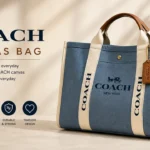
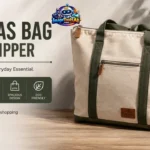
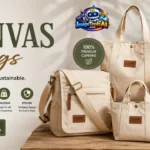
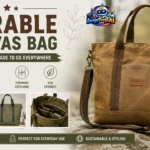
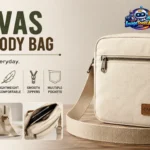
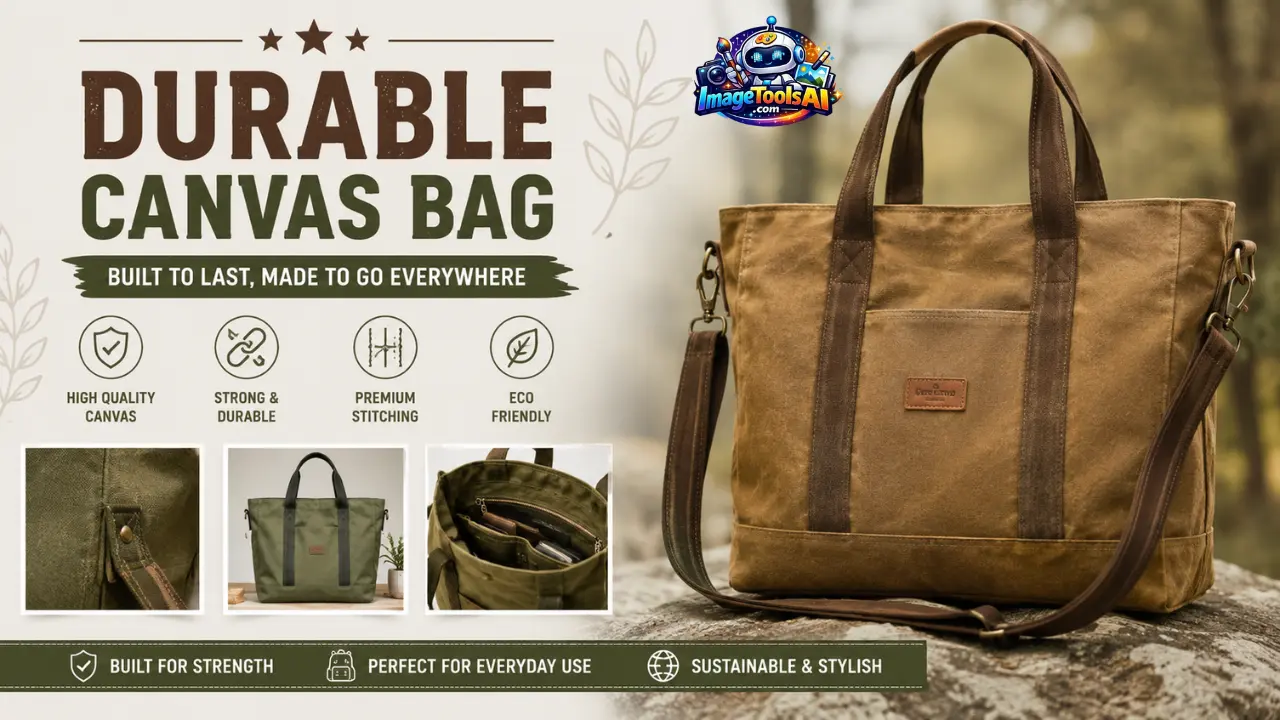
A canvas bag is a true multipurpose, long-lasting product. Such a bag can serve for many years and replace a considerable number of bags in its lifetime. It can also be used for various purposes. A sturdy bag made of this fabric can withstand the demands of everyday life and become a faithful assistant. However, choosing such a bag requires knowing exactly what qualities it should have, such as a Durable Canvas Bag.
Most sellers’ guides do not go into detail on the nuances of the material or provide objective information about a particular product. Therefore, buyers should know exactly what to look for when buying canvas and what to pay attention to when they find the desired product. This guide aims to provide useful advice and information about canvas bags, canvas characteristics, and factors influencing their strength. Moreover, this guide will tell you how to choose bags based on your requirements and what advantages they have over other bags made of leather, nylon, and polyester.
Various details of canvas production, such as materials, characteristics, weaving technologies, and more, will be discussed. Information about certifications that indicate high quality and durability of the bag will also be given. Methods of testing products for strength, maintenance and care rules that prolong the life of the bag, and much more will be discussed. After reading this guide, you will be able to choose a bag of the desired size and characteristics and get the most out of your purchase.
What Is a Durable Canvas Bag?
A durable canvas bag is a bag made of tightly woven canvas, which is designed to resist heavy usage, carry a substantial load, and resist wear and tear.
Unlike lighter bags made of canvas, durable canvas bags are made using heavier weaves, thicker threads, reinforced seams, and stronger hardware, which make them capable of carrying a much heftier load while resisting damage and tearing.
A Brief History of Canvas
Canvas has been trusted for centuries because of its exceptional strength. Historically, it was used for:
- Ship sails
- Military tents
- Backpacks
- Tool bags
- Work aprons
- Outdoor equipment
- Artist canvases
Its name is believed to originate from the Latin word cannabis, as early canvas fabrics were woven from hemp fibers before cotton became the dominant material.
Today, advancements in textile manufacturing have expanded canvas into one of the most versatile fabrics for bags, luggage, fashion accessories, and reusable shopping products.
Modern Canvas Manufacturing
Modern canvas is produced by weaving thick yarns together into a dense fabric. The weaving process directly influences durability, flexibility, and appearance.
Manufacturers may use:
- 100% cotton
- Cotton duck canvas
- Organic cotton
- Recycled cotton
- Cotton-poly blends
- Polyester canvas
- Wax-treated canvas
Each material offers different advantages depending on the intended application.
Common Uses of Durable Canvas Bags
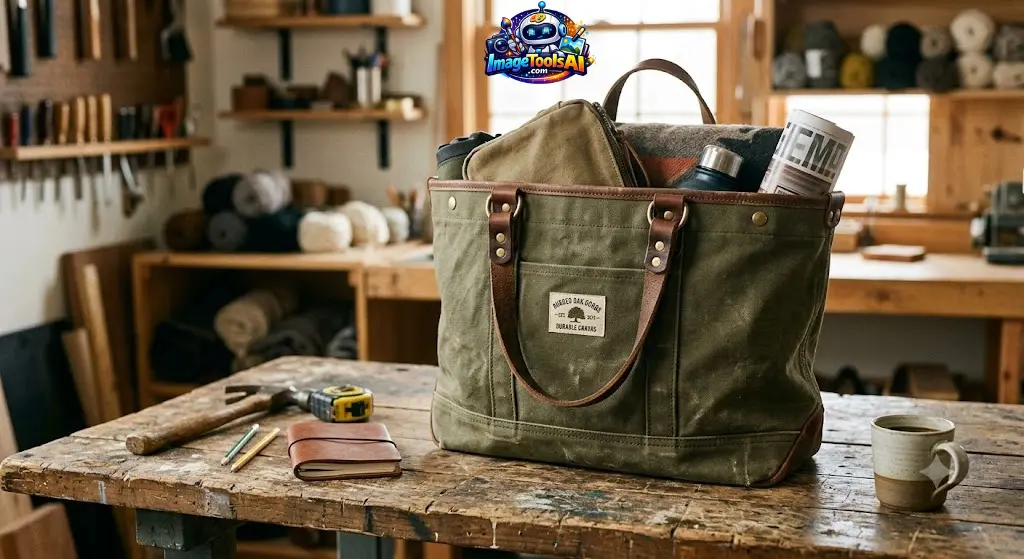
Because of their strength and versatility, durable canvas bags are used across many industries and everyday situations.
Popular applications include:
- Grocery shopping
- Daily commuting
- School and college
- Business travel
- Office Work
- Photography gear
- Gym equipment
- Farmers’ markets
- Promotional merchandise
- Retail shopping
- Beach outings
- Camping
- Hiking
- Tool storage
- Weekend travel
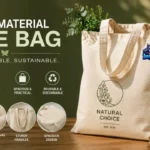
Their ability to combine practicality with sustainability has made canvas bags a preferred alternative to single-use plastic bags.
Why People Prefer Canvas Bags
Durability is only one reason canvas bags continue to grow in popularity.
Additional benefits include:
- Reusable for years
- Comfortable to carry
- Eco-friendly options available
- Easy to customize with printing or embroidery
- Available in many sizes and styles
- Timeless appearance
- Suitable for both casual and professional use
- Lower long-term cost than disposable bags
For businesses, canvas bags also serve as effective promotional products because they offer repeated brand exposure while providing practical value to customers.
Quick Summary
A durable canvas bag combines high-quality fabric, strong construction, and thoughtful design to deliver reliable performance over years of use. Understanding the materials and manufacturing process is the first step toward choosing a bag that truly lasts.
Why Canvas Is One of the Most Durable Bag Materials
When people think about long-lasting bags, materials like leather and nylon often come to mind. However, high-quality canvas has earned its reputation as one of the most dependable fabrics for everyday use because it offers an excellent balance of strength, flexibility, affordability, and sustainability.
The durability of canvas isn’t based on a single feature. Instead, it’s the result of several engineering factors working together—from fiber quality and weave density to stitching and reinforcement.
Dense Weave Creates Exceptional Strength
Canvas is made by weaving thick yarns tightly together. This dense construction distributes weight evenly across the fabric, helping it resist stretching and deformation even under heavy loads.
Compared with lightweight woven fabrics, tightly woven canvas maintains its structure far better during repeated use.
Why a Dense Weave Matters
- Reduces tearing under tension
- Improves resistance to punctures
- Maintains bag shape
- Supports heavier items
- Extends overall lifespan
The tighter the weave, the better the fabric can withstand everyday stress without weakening.
Natural Cotton Fibers Offer Excellent Durability
Premium canvas bags are commonly made from long-staple cotton fibers. These fibers are naturally strong and become softer with use while maintaining their structural integrity.
Unlike many synthetic fabrics that can become brittle over time, quality cotton canvas develops character without losing performance.
Long-staple cotton also reduces pilling and improves resistance to repeated folding.
Superior Tear Resistance
One of canvas’s greatest advantages is its ability to resist tearing.
Because the fibers are densely interlocked, a small puncture is less likely to spread into a large tear. This makes canvas particularly suitable for carrying books, groceries, tools, laptops, and other heavy items.
Heavy-duty canvas fabrics, especially cotton duck canvas, are engineered specifically for demanding applications where tear resistance is essential.
Abrasion Resistance for Everyday Use
Daily activities expose bags to constant friction against clothing, desks, floors, vehicle interiors, and rough surfaces.
Canvas performs exceptionally well under these conditions because its thick yarns absorb wear gradually rather than fraying quickly.
This makes durable canvas bags an excellent choice for:
- Daily commuters
- Students
- Travelers
- Retail workers
- Outdoor enthusiasts
- Small business owners
Why Canvas Is One of the Most Durable Bag Materials
Outstanding Load-Bearing Capacity
A major reason canvas remains popular is its ability to carry substantial weight without failure.
A well-constructed heavy-duty canvas bag can often carry:
- Groceries
- Books
- Laptops
- Camera equipment
- Travel essentials
- Work tools
without excessive stretching or damage.
The actual load capacity depends on:
- Fabric weight
- Stitch quality
- Handle reinforcement
- Seam construction
- Base reinforcement
A thick canvas bag with reinforced handles can safely support far more weight than a standard promotional tote.
Long Service Life
When properly maintained, a durable canvas bag can remain functional for many years.
Typical lifespan estimates:
| Canvas Quality | Expected Lifespan |
| Lightweight Canvas | 1–3 Years |
| Medium-Weight Canvas | 3–5 Years |
| Heavy-Duty Canvas | 5–10+ Years |
| Waxed Canvas | 10–20+ Years |
Actual lifespan depends on usage, maintenance, storage conditions, and load frequency.
Sustainability Adds Long-Term Value
Durability and sustainability often go hand in hand.
A reusable canvas bag that lasts several years can replace hundreds or even thousands of disposable plastic bags.
This lowers:
- Environmental impact
- Replacement costs
- Material waste
Mini Summary
Canvas remains one of the strongest bag materials because it combines:
- Dense weaving
- Strong fibers
- Excellent tear resistance
- High abrasion resistance
- Long service life
- Sustainable reusability
These characteristics make it suitable for both everyday consumers and professional users.
Types of Canvas Used for Durable Bags
Not all canvas fabrics are created equal.
Understanding different canvas types is one of the most important steps when choosing a long-lasting bag.
The fabric determines:
- Strength
- Weight
- Weather resistance
- Appearance
- Maintenance requirements
- Lifespan
Cotton Canvas
Cotton canvas is the most common type used in bags.
It is woven from natural cotton fibers and offers a balance of durability, comfort, and affordability.
Advantages
- Breathable
- Flexible
- Comfortable
- Eco-friendly
- Easy to clean
- Widely available
Best For
- Grocery bags
- Tote bags
- Shopping bags
- Everyday carry
Limitations
- Less water-resistant
- Can absorb moisture
- May shrink if improperly washed
Cotton Duck Canvas
Cotton duck canvas is widely considered one of the strongest canvas materials available.
The word “duck” comes from the Dutch term “doek,” meaning cloth.
Unlike standard canvas, duck canvas uses a tighter weave that significantly improves durability.
Advantages
- Extremely strong
- High tear resistance
- Excellent abrasion resistance
- Better shape retention
Best For
- Work bags
- Travel bags
- Tool bags
- Heavy-duty totes
- Military applications
Ideal Weight Range
12 oz–24 oz canvas
Many premium brands use cotton duck canvas because of its exceptional durability.
Waxed Canvas
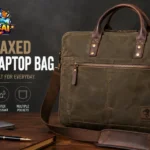
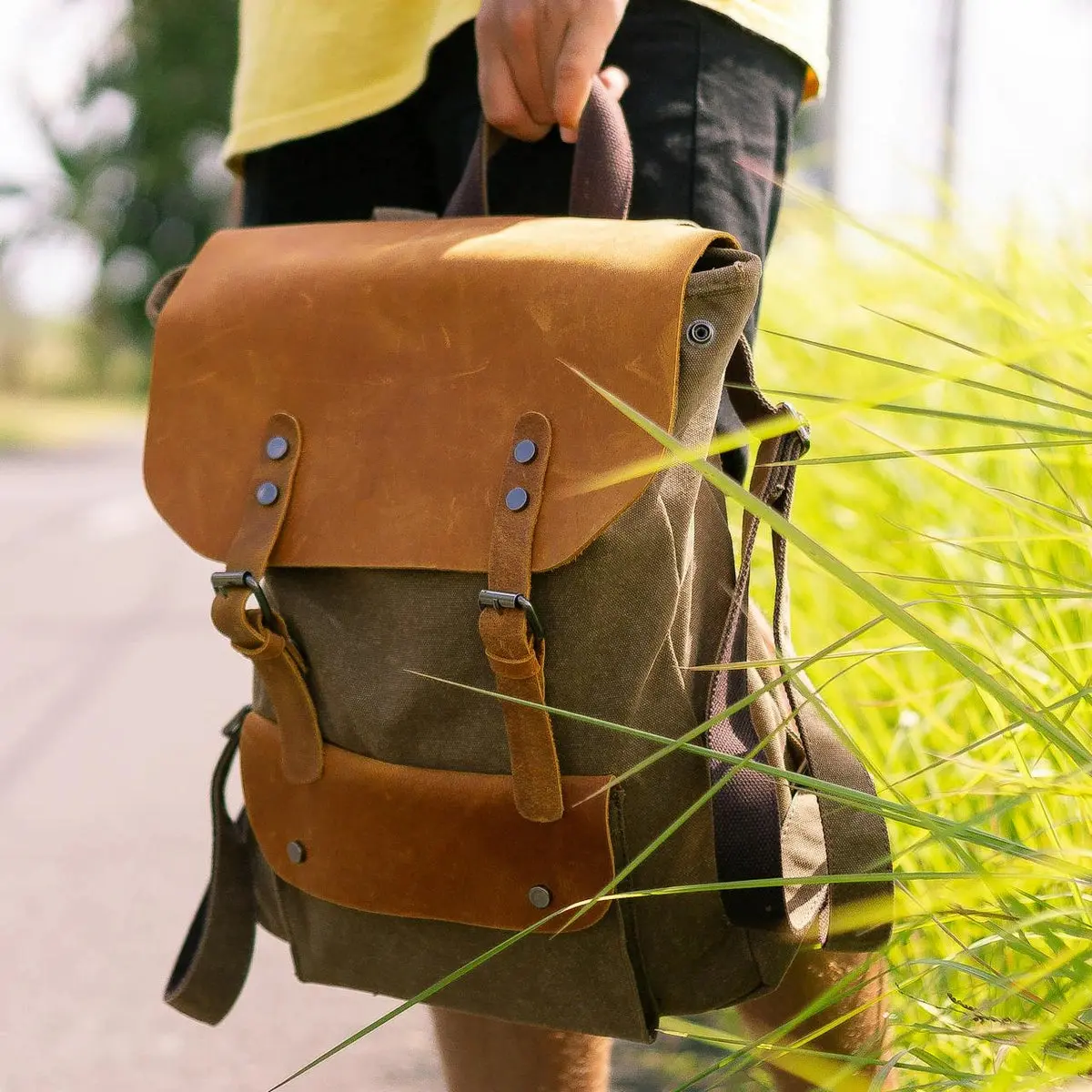
Waxed canvas is standard canvas treated with wax to improve weather resistance.
Historically used in sailing and outdoor gear, it remains popular for rugged bags.
Advantages
- Water resistant
- Wind resistant
- Extremely durable
- Develops attractive patina
- Long lifespan
Best For
- Travel bags
- Messenger bags
- Outdoor gear
- Work bags
Limitations
- Requires occasional rewaxing
- Not machine washable
Organic Canvas
Organic canvas is produced from certified organic cotton.
The fabric itself can be just as durable as conventional cotton canvas.
Advantages
- Reduced environmental impact
- Sustainable farming methods
- Fewer chemical residues
- Premium brand appeal
Certifications Often Seen
- GOTS
- OEKO-TEX
Best For
- Eco-conscious buyers
- Sustainable Brands
- Premium tote bags
Recycled Canvas
Recycled canvas uses reclaimed cotton fibers and textile waste.
Modern manufacturing techniques have significantly improved quality and durability.
Advantages
- Lower environmental footprint
- Reduced landfill waste
- Strong sustainability story
Best For
- Sustainable brands
- Promotional bags
- Corporate gifting
Polyester Canvas
Polyester canvas is made from synthetic fibers rather than cotton.
While less natural in appearance, it offers certain performance advantages.
Advantages
- Water resistant
- Lightweight
- Fast drying
- UV resistant
Best For
- Outdoor use
- Sports bags
- Travel bags
Limitations
- Less eco-friendly
- Different texture than cotton
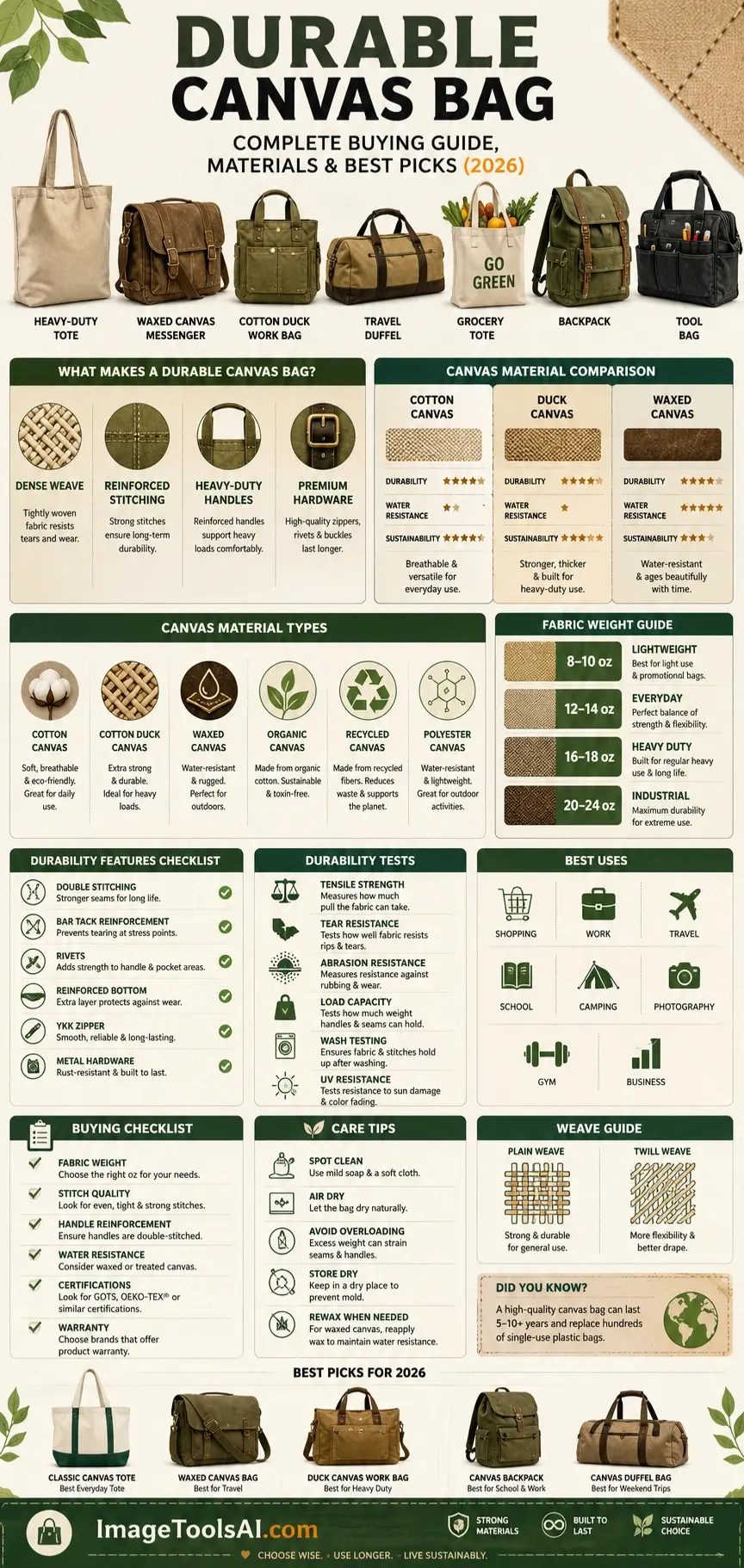
Canvas Type Comparison Table
| Canvas Type | Durability | Water Resistance | Sustainability | Best Use |
| Cotton Canvas | High | Low | High | Everyday Use |
| Duck Canvas | Very High | Low | High | Heavy Loads |
| Waxed Canvas | Extremely High | High | Medium | Outdoor & Travel |
| Organic Canvas | High | Low | Very High | Eco-Friendly Use |
| Recycled Canvas | Moderate-High | Low | Very High | Sustainable Products |
| Polyester Canvas | High | Moderate | Low | Outdoor Activities |
Mini Summary
For maximum durability:
- Duck Canvas
- Waxed Canvas
- Heavy Cotton Canvas
These fabrics consistently outperform lighter materials in demanding applications.
What Makes a Canvas Bag Truly Durable?
A durable canvas bag is more than thick fabric.
The strongest bags combine multiple quality factors.
Ignoring any one of these can dramatically reduce lifespan.
Fabric Thickness
Fabric weight forms the foundation of durability.
Thin canvas may look attractive but usually wears out faster.
For long-term use, choose:
- Minimum 12 oz for daily use
- 14 oz+ for heavy-duty applications
Fiber Quality
Not all cotton fibers are equal.
Premium manufacturers often use:
- Long-staple cotton
- Combed cotton
- Ring-spun cotton
These fibers improve:
- Strength
- Smoothness
- Longevity
Stitch Density
More stitches generally create stronger seams.
Poor stitching often causes failure before the fabric itself wears out.
Signs of quality stitching:
- Straight seams
- Tight spacing
- No loose threads
- Consistent tension
Reinforced Corners
Corners experience significant stress.
Premium bags often include:
- Double layers
- Reinforced patches
- Additional stitching
These features prevent premature wear.
Handle Construction
Handles are one of the most common failure points.
High-quality bags use:
- Extended handle attachment
- Cross-stitch reinforcement
- Box stitching
- Bar tack stitching
Avoid bags with handles sewn using only a single seam.
Bar Tack Stitching
Bar tacks are short, dense stitches added at stress points.
Common locations:
- Handle bases
- Pocket corners
- Strap connections
These dramatically increase durability.
Rivets and Reinforcement Hardware
Metal rivets help distribute stress.
Benefits include:
- Increased load capacity
- Reduced seam strain
- Longer lifespan
Premium bags often combine rivets with reinforced stitching.
Zipper Quality
A durable bag deserves a durable zipper.
Look for trusted zipper manufacturers such as:
- YKK
- RiRi
- SBS
Cheap zippers frequently fail before the fabric wears out.
Reinforced Bottom Panels
Heavy loads place tremendous pressure on the base.
Premium bags often feature:
- Double-layer bottoms
- Structured inserts
- Additional fabric reinforcement
These improve:
- Shape retention
- Load capacity
- Longevity
Durability Tests Every Buyer Should Understand
Manufacturers often advertise a bag as “heavy duty” or “premium,” but these claims should be supported by measurable performance. Understanding common durability tests helps you evaluate quality beyond marketing language.
Tensile Strength
Tensile strength measures how much pulling force the fabric can withstand before it breaks.
Higher tensile strength generally indicates:
- Stronger fibers
- Better weave quality
- Greater load-bearing capacity
Tear Resistance
Tear resistance measures how effectively a fabric prevents a small puncture or cut from expanding into a larger tear.
High-quality cotton duck canvas performs especially well because of its dense weave.
Abrasion Resistance
Abrasion testing simulates years of rubbing against clothing, floors, desks, and rough surfaces.
Better abrasion resistance means:
- Less fraying
- Better appearance over time
- Longer service life
Load Testing
Responsible manufacturers test handles and seams by repeatedly loading the bag with weight.
Heavy-duty canvas bags commonly support 20–50 pounds (9–23 kg) depending on construction and reinforcement.
Wash Testing
Repeated washing can weaken fabrics and stitching if low-quality materials are used.
Well-made canvas bags should retain:
- Shape
- Color
- Stitch integrity
- Structural strength
after multiple wash cycles (except waxed canvas, which should not be machine washed)
UV Resistance
Extended sunlight exposure can fade colors and weaken fibers over time.
Premium dyes and UV-resistant thread improve outdoor durability.
Colorfastness
Colorfastness indicates how well the fabric resists fading or bleeding during washing and everyday use.
This is particularly important for dark-colored canvas bags.
Mini Summary
When evaluating a durable canvas bag, don’t rely solely on labels like “premium” or “heavy duty.” Look for evidence of quality materials, reinforced construction, and performance testing.
How to Identify a High-Quality Canvas Bag
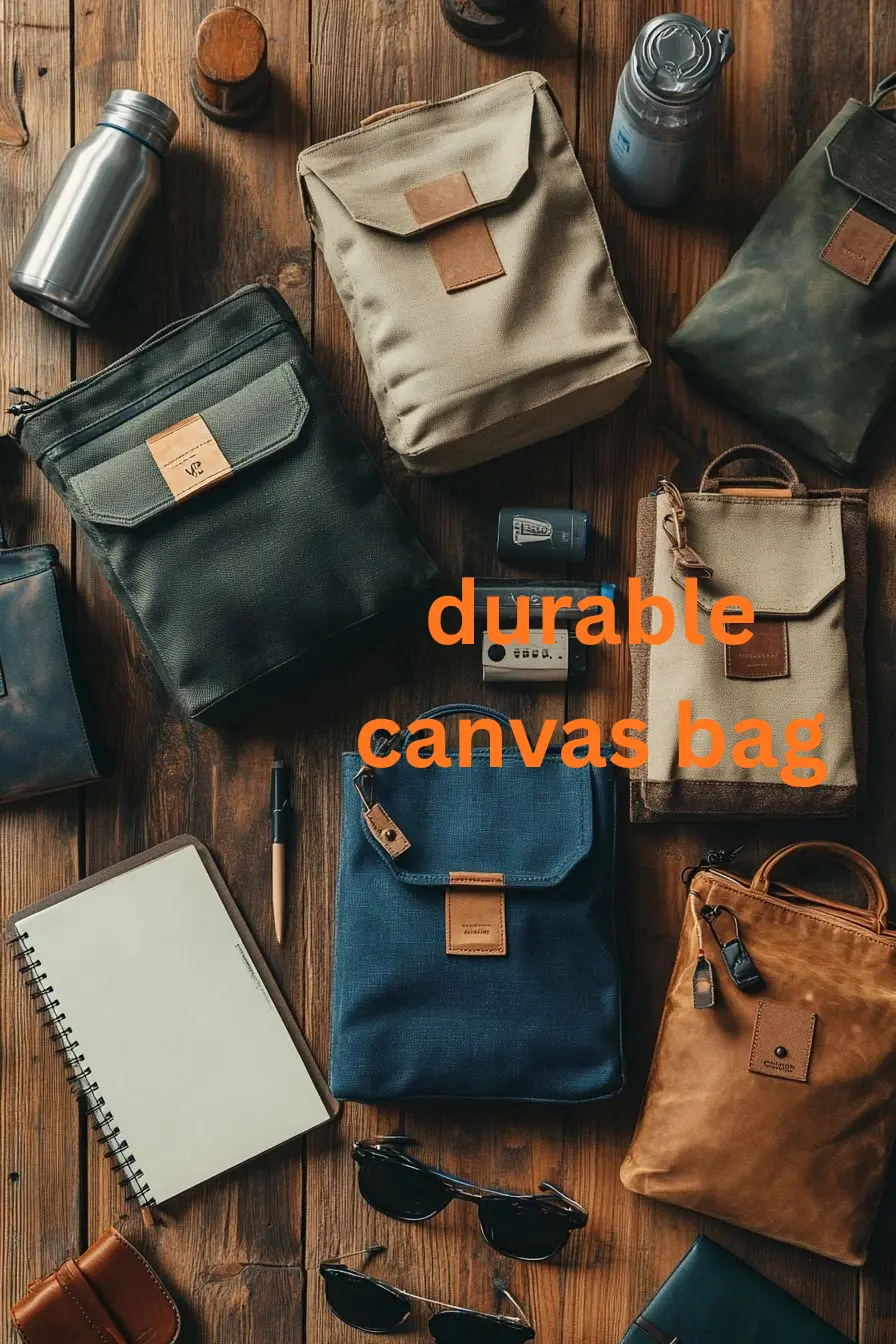
Before purchasing, inspect the following areas carefully.
Fabric
The fabric should feel thick, tightly woven, and substantial without being overly stiff.
Avoid:
- Loose weaving
- Thin fabric
- Uneven texture
Stitching
Inspect every seam.
Look for:
- Straight stitching
- Even spacing
- Double-stitched seams
- No loose threads
Handles
Strong handles should be:
- Double layered
- Reinforced with box or X stitching
- Comfortable to grip
Hardware
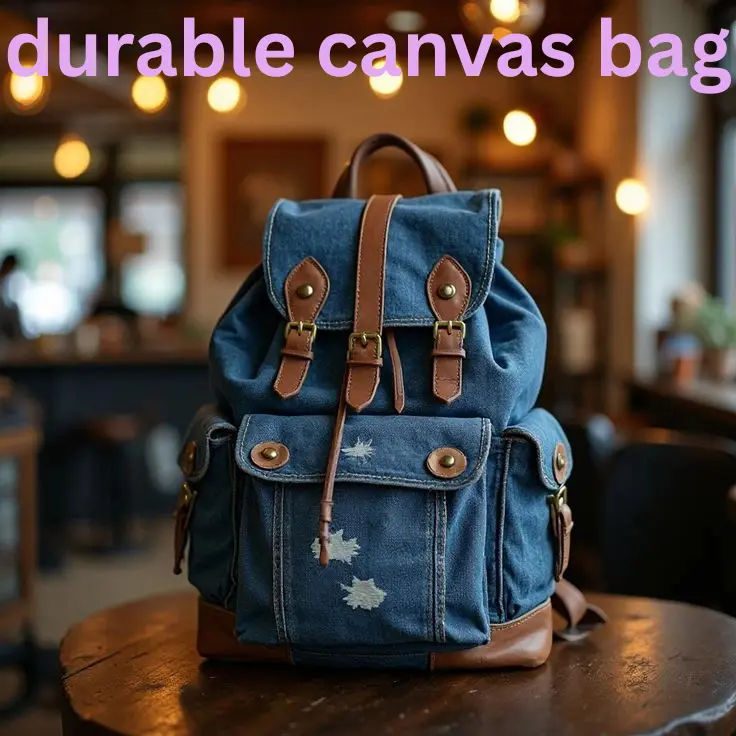
Quality hardware includes:
- Brass
- Stainless steel
- Heavy-duty metal buckles
- Reliable YKK zippers
Avoid lightweight plastic components on heavy-duty bags.
Shape Retention
A quality bag should maintain its shape even when partially loaded.
Excessive sagging usually indicates weak construction.
Reinforcement
Check for extra reinforcement at:
- Bottom panel
- Handle attachment points
- Side seams
- Corners
Lining
Premium bags often include:
- Heavy cotton lining
- Water-resistant lining
- Padded laptop protection
Zippers
A durable zipper should:
- Glide smoothly
- Feel substantial
- Have reinforced stitching around the zipper tape
YKK zippers remain one of the industry’s most trusted options for long-term reliability.
Expert Inspection Checklist
Before buying, ask yourself:
- Is the fabric at least 12 oz?
- Are the seams double stitched?
- Are handles reinforced?
- Is quality hardware used?
- Is the bottom reinforced?
- Does the bag keep its shape?
- Is the zipper smooth and sturdy?
- Does the manufacturer offer a warranty?
If the answer is “yes” to most of these questions, you’re likely investing in a bag built for years of dependable use.
Common Mistakes Buyers Make
Many disappointing purchases happen because buyers focus on appearance instead of construction quality.
Avoid these mistakes:
Buying the Cheapest Option
Low prices often mean:
- Thin fabric
- Weak stitching
- Poor hardware
Ignoring Fabric Weight
Many listings simply say “canvas” without mentioning the fabric weight.
Always look for:
- GSM
- Ounce weight
- Cotton duck specifications
Overlooking Handle Reinforcement
Handles are the most common failure point.
Always inspect:
- Stitching
- Rivets
- Reinforcement
Choosing Poor Zippers
Cheap zippers frequently fail before the fabric does.
Reliable brands such as YKK generally offer better long-term performance.
Washing Waxed Canvas Incorrectly
Machine washing removes the protective wax coating and shortens the life of the bag.
Always follow the manufacturer’s care instructions.
People Also Ask
Yes. A well-made canvas bag with thick fabric, reinforced stitching, and quality hardware can last for many years. The exact lifespan depends on fabric weight, construction quality, usage, and maintenance.
Cotton duck canvas is generally considered one of the strongest options for everyday bags because of its dense weave and excellent resistance to tearing and abrasion.
A premium canvas bag used under normal conditions can often last 5–10 years or longer. Regular cleaning, proper storage, and timely repairs can further extend its lifespan.
Waxed canvas is water-resistant, not completely waterproof. It protects well against rain and splashes but should not be submerged in water for extended periods.
For most people, 14–16 oz cotton duck canvas offers the best balance of durability, comfort, and versatility. Lighter fabrics suit casual use, while 18–24 oz is better for industrial or heavy-duty applications.
Conclusion
Choosing a bag made from canvas fabric should not be taken lightly. Bags should be made from high-quality materials that hold up well under different conditions. In making your decision, you must consider the fabric’s weight, weave, and reinforcement, as well as hardware and care, to ensure the bag’s durability.
Bags made from quality canvas fabric can be used for different purposes, including carrying groceries, going to the beach or the mall, and going to work. These are just some of the reasons why you should buy a long-lasting bag made from high-quality materials.
For more information, Visit ImageToolsAI. com to view other buying guides and compare products to ensure you are making the most out of your purchase.